Borrowed Air
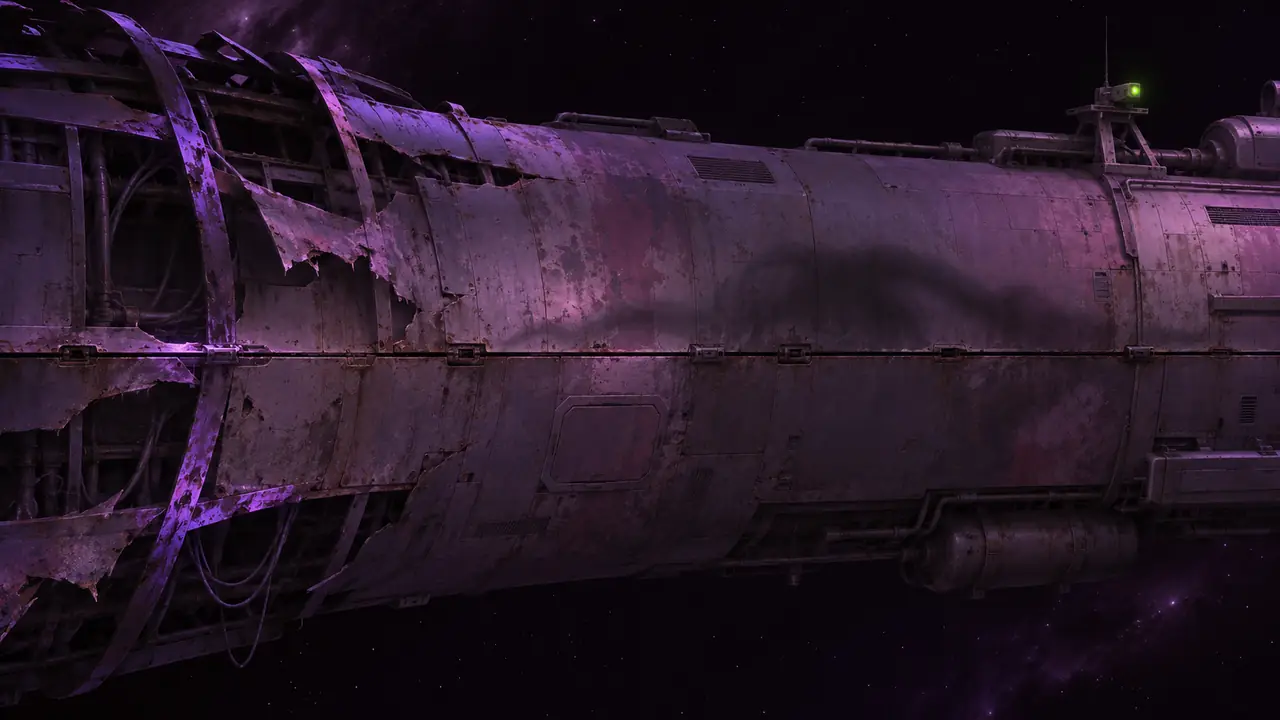
In Borrowed Air the astronaut crosses a ship whose outside surface has started to relay pressure fluctuations. Two receivers mounted on the interior show small spikes, then settle. Something may be following the ribs on the outside. A single impact could also create a pair of spikes by reaching one receiver straight away and another through a longer section of panel.
Keep the sensor order available
At the first work station you can view the two arrivals as recordings with separate time marks. A common zero appears only after both sensors have reported their position in the circuit. The first interpretation often draws a path between the receivers. Inspect the fastening panel at the seam and you may see why the second wave could have taken a longer way around. The prototype keeps that alternate path behind a deliberate comparison so the primary reading remains simple.
Walk to a new listening point, connect the working lead and wait long enough to record a second observation. The lead takes power and occupies the only convenient route back from the lower crawlway. A search that keeps using the short branch can be repeated, but it leaves one panel poorly observed. An attempt from the farther branch exposes the seam at the cost of a move while the indicator is idle.
Make the material readable in poor light
The case uses nearly black panels arranged against violet light. A transparent edge catches enough reflection to show where one section is joined to the next. The screws and seams should still read without an illuminated instrument. A pressure event lights a small green mark at the station receiving it. When the receiver is off, the mark disappears and the shared panel remains available for close examination.
Sounds heard through the panel depend on where the astronaut stands. The sound rendered at the station with headphones is a recording. Its timing remains fixed if you walk away. The prototype allows a player to compare a new sound in the crawlway with a trace they recorded from the launch position. The record keeps its origin and can be examined again before the route is committed.
Open the inner hatch with room to recover
The backup source shares a branch with the sensors and the inner hatch. Opening the hatch creates a brief period in which the sensors cannot collect a fresh pair. You can review the last intact reading before pressing the control. The exercise shows how long the gap will last and what you have enough power to do after it. A cautious route pauses at the station nearest the hatch so you can recover a reading after it moves.
The concept is in prototype development. Its current scene tests whether the player can compare the pair of arrivals without treating the line between the sensors as a confirmed route. Read the panel arrivals record to investigate the seam. The emergency load record describes the gap when the hatch opens. A related ambiguity appears in Quiet Bearing’s antenna exercise when a weak signal has a reflected path.
The two readings remain inspectable after the hatch opens. The gap is labelled as an interval with no sample and can be revisited when you return along the crawlway.